A Pantry Shelf for a Week of Unplanned Suppers
Build a pantry shelf for unplanned suppers with versatile staples, simple pairings and a small restock habit that makes last-minute cooking easier.
You open the fridge after work and find half a cabbage, a lemon and a tub of yoghurt, but no plan for supper. A pantry shelf for unplanned suppers gives those odds and ends somewhere to go: a small group of ingredients that can become different meals, rather than a menu you must follow.
The useful question is not, “What should I cook every night?” It is, “Which pantry foods can connect with what I already have?” Choose ingredients by the jobs they can do, then keep a few easy pairings in mind. The result is flexibility without a cupboard full of hopeful purchases.
Choose the shelf that matches your cooking life
Start with your usual kitchen, not an idealised version of it. A person who cooks for one and dislikes leftovers needs a different shelf from a household that welcomes a pot of soup for tomorrow. Pick the situation closest to yours and adjust from there.
- If you have little storage: Keep a compact set of dry staples that share uses. A bag of rice, a packet of pasta, tinned beans, tinned tomatoes, stock cubes and peanut butter can support several kinds of meal without requiring specialist equipment. Choose smaller packs if a large quantity is likely to linger.
- If you often have fresh vegetables to use: Prioritise ingredients that turn them into a meal. Tinned chickpeas add substance to greens; coconut milk can soften a spicy vegetable stew; pasta or couscous gives roasted or quickly sautéed vegetables a base.
- If you cook for different appetites: Keep a plain base and additions separate. Rice, noodles or baked potatoes can be served with beans, a tin of fish, chilli sauce or grated cheese on the side, so each person can make a satisfying plate.
- If you rarely cook from scratch: Choose foods that need only one or two additions. Tinned soup can be bulked out with beans or frozen vegetables; instant noodles can take an egg or greens; couscous can be paired with tinned lentils and a spoonful of chutney.
Use foods you already enjoy. A versatile ingredient is not useful if you keep avoiding it. Allergies, dietary needs and package directions may narrow the choices; check labels and follow the maker’s instructions where relevant.
Build around ingredients that do more than one job
A practical shelf has a few different roles rather than many versions of the same thing. Think in terms of a base, a source of substance, a flavour-maker and a quick meal helper.
- Bases: rice, pasta, noodles, couscous or oats. Pick the ones you can cook comfortably and use in meals you like.
- Substantial additions: tinned beans, lentils, chickpeas, fish or shelf-stable tofu where available. These can turn a bowl of grains or vegetables into a more filling supper.
- Flavour-makers: tinned tomatoes, coconut milk, curry paste, soy sauce, vinegar, mustard, stock cubes, dried herbs or chilli flakes. A few familiar choices are more useful than an assortment you cannot place.
- Quick helpers: peanut butter, passata, jarred peppers, olives or a jar of pesto. These can make a simple base feel more complete without a long cooking session.
You do not need every item on the list. Choose one or two from each role, taking account of cupboard space and the fresh foods you tend to buy. If you often have onions and carrots, tinned tomatoes and lentils may fit. If you rarely keep fresh vegetables, frozen peas or tinned sweetcorn can provide an easy addition.
Match each staple to a simple supper direction
Give each pantry ingredient a destination before you buy it. These are loose directions, not recipes; use the quantities and cooking times that suit your appetite and the packet instructions.
- Pasta: Toss with tinned tomatoes, beans and dried herbs, or combine with pesto and any cooked vegetables.
- Rice: Serve with tinned chickpeas simmered in coconut milk and curry paste, or stir through frozen peas and top with a fried egg.
- Beans: Warm with tomatoes and smoked paprika for toast, or add to a bowl of rice with a sharp splash of vinegar.
- Noodles: Dress with soy sauce and peanut butter loosened with hot water, then add greens or leftover cooked vegetables.
- Couscous: Pair with tinned lentils, lemon and jarred peppers; add yoghurt if you have some.
- Oats: Make a savoury bowl with an egg and spring onions, or keep them for a quick breakfast when supper plans change again.
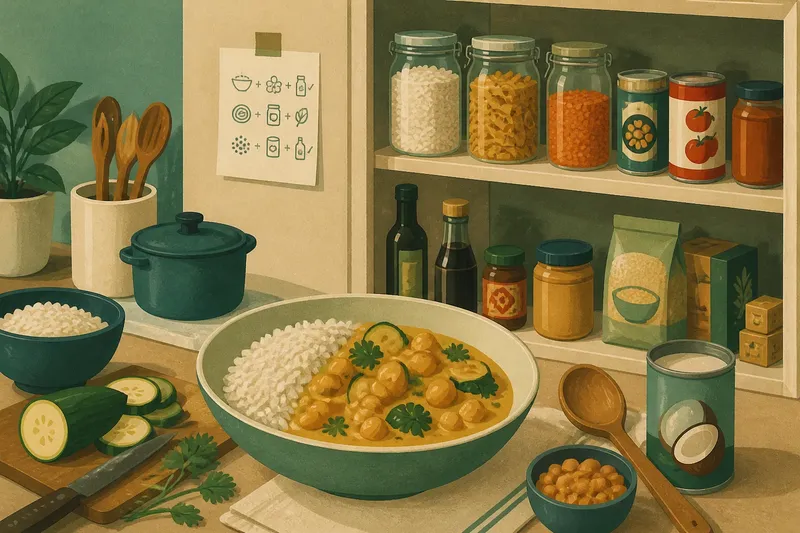
Imagine you have rice, tinned chickpeas, coconut milk and curry paste, plus a softening courgette. You could cook the rice, simmer the sliced courgette and chickpeas with coconut milk and a little curry paste, then serve them together. The expected result is a warm, filling bowl, with the spice adjusted to your preference.
Let your shopping habits decide what earns space
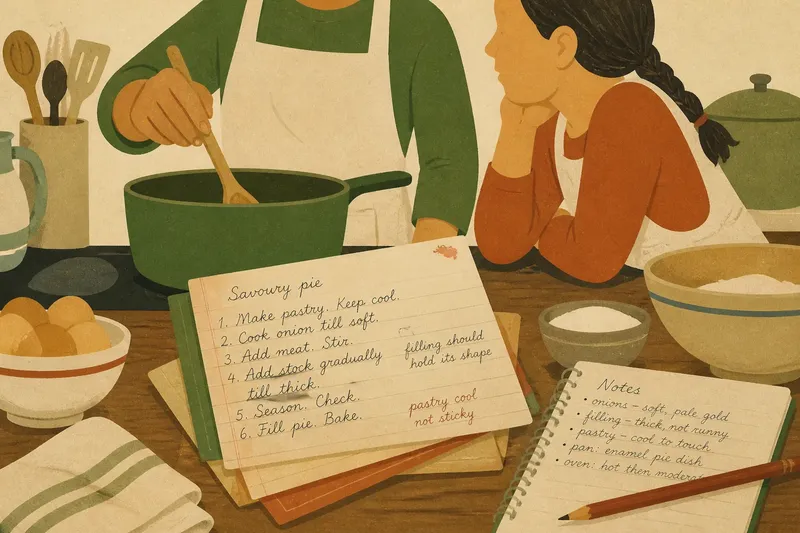
Pantry planning works best as a light routine. After shopping, note what you brought home and what is already open. A scrap of paper inside the cupboard door can hold three or four pairings you genuinely like. A phone note works just as well, especially if you shop with it.
Before adding a new staple, ask whether it can join at least two meals you already make. If tahini would only be used for one unfamiliar dish, it may not deserve limited space yet. If it can dress noodles and enrich a bowl of chickpeas, it has a clearer place.
Rotate food by moving older packets and tins to the front. Keep opened ingredients sealed as directed on the packaging, and make a note when you use the last of something. Restock only the foods that earned their space; the shelf should reflect your real cooking, not an ambitious version of it.
What should a flexible pantry include?
How many ingredients should I keep?
There is no ideal count. Start with a base, a filling addition and a flavour-maker that you already use, then add items only when they answer a recurring supper problem.
Which pantry foods suit a small household?
Choose ingredients that keep well in the quantities you can use, such as small packs of pasta, rice or lentils and tins that fit more than one meal. If a tin is larger than you need, plan a second use for the remainder and store it safely according to its label.
How can I improvise when the fridge is nearly empty?
Begin with the staple that can make a meal base, then add one substantial pantry food and a flavour-maker. Even a simple combination of noodles, beans and soy sauce can be made more appealing with any available frozen vegetables, herbs or condiment.
How often should I restock the shelf?
Check it when you make your shopping list, rather than buying a fixed bundle every week. Replace what you have used or what you know will suit the next stretch of cooking.
A pantry shelf for unplanned suppers is most helpful when it leaves room for the food already waiting in your fridge. Keep a few reliable pairings, let the available vegetables choose the direction, and allow the rest of the meal to stay pleasantly open.