Why Pan Shape Changes the Way Food Meets Heat
Pan shape changes how food meets heat: learn to match base width, sides and depth to searing, sautéing, simmering and the hob you use.
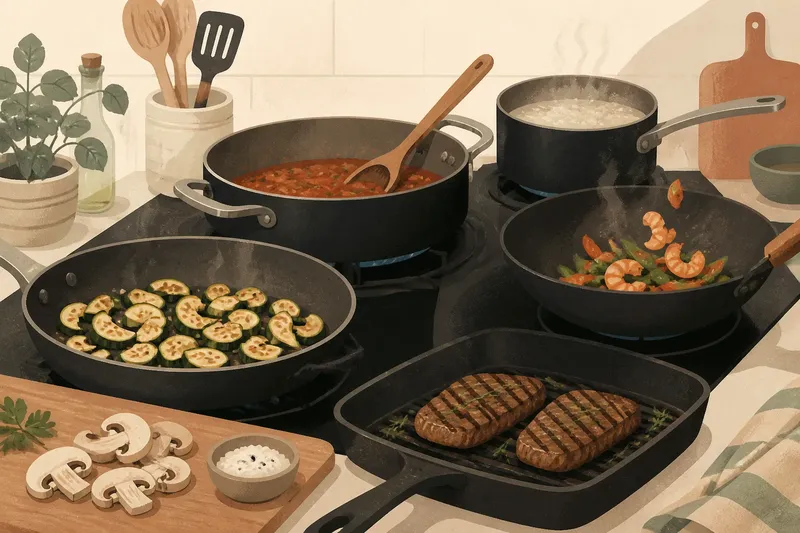
You drop sliced mushrooms into a frying pan, and they sit in a crowded mound instead of lying in a single layer. A few minutes later, some are browned while others have softened in their own liquid. Pan shape changes how food meets heat, and the base, sides and depth help explain why the same ingredient behaves differently from one pan to another.
Choosing a shape is less about finding one pan for every recipe than understanding what you want the food to do. Begin with the cooking surface, then consider how much direct contact you need, where moisture should go and how easily you want to move or turn the ingredients.
Start with the hob and the pan base
The base is the part of the pan that sits against the cooking surface. A broad, flat base offers more room for food to rest over the heat. A narrower base concentrates the cooking area, while a rounded base may not sit securely or make even contact on a flat electric or induction hob.
For a gas hob, the flame should meet the base rather than curl far up the sides. A pan much wider than its burner may leave the outer area slower to heat; a pan much smaller can expose its sides to the flame. On a ceramic or solid electric hob, a flat base that matches the cooking zone helps maintain contact. Induction requires compatible cookware, and the base should suit the marked zone.
Before choosing, look at the actual cooking surface, not just the pan’s rim. If you often cook for one or two people, a modest base can keep a small portion gathered over the heat. If you regularly brown several portions, a broader base gives pieces more room. A crowded layer releases moisture into the pan and can steam rather than brown.
Imagine you usually cook diced courgette for a quick lunch on a small induction zone. A wide pan with a much larger base may leave the outer pieces less evenly heated; choosing a flatter pan closer to the zone’s size could make it easier to keep the pieces in a consistent layer and turn them together. The visible cue is simple: food should sit in the heated area without being piled up or pushed against a cold edge.
Choose sides for the way food moves
Low, gently sloped sides make it easier to slide a spatula under food and toss small pieces. That shape suits sautéing vegetables, turning pancakes and moving food quickly between the base and a plate. The slope also leaves the rim open, so steam can escape readily.
Straight, taller sides contain splashes and help keep ingredients in the pan when you stir. They are useful for a sauce, a shallow braise or a dish that needs frequent mixing. The taller wall can also make it harder to reach across the base with a turner, so consider the tool you prefer to use.
Curved sides offer a middle ground. A rounded transition from base to wall gives a spoon room to sweep around the pan, which is handy when loosening browned bits into a sauce. A wok has high, sloping sides and a relatively small bottom; food can be moved between the hotter centre and the sides, but the shape works best when the hob and cooking style suit it.
Think about the direction of movement in the recipe. If you want to shake the pan, a lighter one with sloped sides may feel manageable. If you plan to stir a thick mixture, straighter walls can keep it contained. A pan that is awkward to lift or reach into may slow down the cooking even if its base is the right size.
Use depth to manage moisture and volume
Depth affects how much food a pan holds and how readily water vapour can leave. A shallow pan gives steam a more open route out, which can help ingredients dry and brown when there is enough room to spread them. A deeper pan holds more liquid and offers room for simmering, but closely packed ingredients may stay moist rather than develop a browned surface.
For crisping or searing, choose a base that gives the ingredients space, and avoid adding so much that they form a deep layer. For soup, curry or a sauce with plenty of liquid, a deeper vessel reduces the chance of splashes and provides room to stir. A sauté pan, with a broad base and relatively deep sides, can bridge those jobs: it gives food a generous cooking area while containing liquid better than a shallow frying pan.
Depth alone does not decide whether food browns. The amount of food, its surface moisture and the heat setting all matter. But the pan can make the task easier or harder. If liquid pools around a crowded batch, cook in smaller portions or choose a wider base before turning the heat higher.
Match familiar pan shapes to the task
Use these common forms as starting points rather than strict rules. The best match depends on your hob, the quantity you cook and how you like to handle food.
- Frying pan: A broad, shallow base and sloped sides suit eggs, pancakes, quick vegetable sautés and foods that need turning. Its open shape lets moisture escape.
- Sauté pan: A wide base with taller, usually straight sides suits browning followed by adding liquid. It contains splashes and gives a spoon room to stir.
- Saucepan: A smaller base and high sides suit boiling, reheating and simmering liquid. The deeper shape limits evaporation compared with a shallow pan.
- Wok: A small, rounded or flattened centre with high sloping sides suits quick tossing when the hob can heat the base appropriately. On a flat hob, check that the wok’s base makes suitable contact.
- Griddle or grill pan: A broad cooking area with ridges raises food above some of its released fat or liquid. The ridges create contact marks, but they do not make the whole surface behave like a flat pan.
Construction matters alongside shape. A thick, heavy base tends to respond more slowly to a change in heat than a thin one, while pan materials differ in how they conduct and retain warmth. For a delicate sauce, responsive control may be useful; for steady browning, a base that holds heat can help. Follow the cookware maker’s guidance on hob compatibility, oven use and utensils, and check local requirements where relevant.
What pan shape suits the job?
Which pan shape is best for browning vegetables?
Choose a broad, flat base that fits your hob and leaves enough room for vegetables to sit in a loose layer. Low sloped sides make turning easy, while a deeper sauté pan can help contain splashes if the pieces are larger or you will add liquid.
Why does food steam instead of brown?
Food may be releasing moisture faster than it can escape, especially if the pan is crowded or the pieces are wet. Spread the food out, cook in batches, or use a wider base with open sides so vapour can leave more readily.
Is a deep pan always better for cooking larger portions?
It holds more volume, but depth does not create more base area. If a large portion needs browning, a deep pan can still crowd the food; use a wider base or divide the batch, then transfer it to a deeper pan if the recipe needs simmering.
Can I use a wok on a flat hob?
A wok with a flat base can sit on many flat hobs, provided the base suits the cooking zone and, for induction, the cookware is compatible. A round-bottomed wok needs a suitable support and heat source rather than resting directly on a flat surface.
Make the choice by watching the food
When you are unsure, start with the pan that gives the ingredient the contact and movement the recipe calls for. Look for a single layer when browning, a clear route for steam when drying food, and enough depth to contain liquid when simmering. The pan’s rim can be misleading: base width is what sets the available floor space.
Pan shape is a useful way to diagnose a cooking snag, not a promise that a dish will turn out a particular way. If food browns unevenly, notice whether the base matches the hob and whether pieces are spread over the heated area. If stirring feels cramped or liquid splashes out, consider the sides and depth. Those visible clues make it easier to choose the right shape for the next meal.