Open Shelves or Closed Cupboards: What Belongs Where?
Open shelves or closed cupboards? Sort kitchen items by how often you use them, how much dust they tolerate and whether you want them on view.
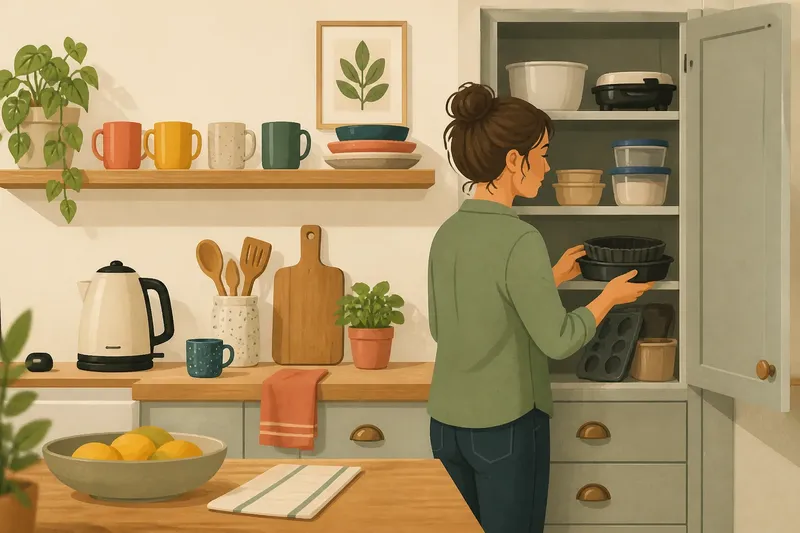
You reach for the same mug before the kettle has finished boiling, while the serving platter above the fridge comes down only when friends visit. That small difference is a useful starting point for deciding between open shelves or closed cupboards: keep frequent, presentable essentials close at hand, and give less-used or visually busy things a door.
The choice need not be all one way. A kitchen can combine a short run of open shelving with cupboards around it, or keep everything behind doors while using a clear counter for the things in regular rotation. The best arrangement depends on what you own, how often it earns its place and how much tidying you want to do.
Open shelves put everyday items in view
A shelf makes its contents easy to spot and reach. That suits objects used in a familiar rhythm: breakfast bowls, mugs, everyday plates, a favourite water glass or a jar of wooden spoons. If you can take an item down with one hand and return it without shifting a stack, the arrangement can make routine cooking feel more direct.
Visibility can also help you notice what needs replacing or washing. A row of bowls is easier to scan than a deep cupboard, where a smaller dish might disappear behind larger pieces. Shelves can be especially useful near a kettle or the place where you usually plate food, provided the items fit the task and do not crowd the work surface.
But open storage is not a neutral backdrop. A colourful collection of mismatched cups may be cheerful to one person and visual clutter to another. Every object contributes to the room’s appearance, so a shelf works best when its contents are things you like seeing, not merely things that have nowhere else to go.
Closed cupboards conceal clutter and reduce exposure
A cupboard hides mixed shapes, spare pieces and packaging behind a door. It is a natural home for the sandwich maker used occasionally, the extra serving bowls, baking tins, travel mugs or a collection of food containers. The room looks calmer without requiring every shelf to be arranged for display.
Doors also put a barrier between stored objects and airborne dust, cooking splashes and grease. They do not make contents immune to grime, and a cupboard still needs ordinary cleaning, but items inside are less exposed than those left uncovered. That can matter for objects that sit unused for a while or are stored near a busy hob.
Closed storage has its own trade-off: the contents are less visible, and reaching them can involve opening doors, moving a stack or checking several shelves. A cupboard that is too deep or packed tightly can turn a familiar tool into a small search. Grouping related pieces and leaving comfortable access to regular items helps prevent that.
Match storage to use, upkeep and appearance
Rather than assigning a whole wall to one storage type, sort objects by the work they do and the attention they need. Three questions help:
- How often do you use it? Frequent-use items are candidates for open storage if they are easy to handle and return. Occasional-use items can usually sit behind a door.
- Does it tolerate being on display? A tidy stack of sturdy plates may suit a shelf. Loose lids, small accessories and assorted containers may be easier to manage in a cupboard.
- How much exposure or upkeep is acceptable? Items that attract grease or dust, or need a rinse before use, may be better enclosed or stored farther from cooking activity.
- Does seeing it make the kitchen feel settled? Keep things visible if their colours and shapes feel pleasing to you. Conceal them if they make the room feel busy.
- Can you put it away easily? A storage spot is more useful when returning an item takes little effort. If a shelf requires precise stacking, a cupboard or drawer may suit the object better.
Imagine you make tea each morning, bake at weekends and own a set of brightly coloured mugs alongside several loose baking attachments. You might place the mugs on an open shelf near the kettle because they are used often and their appearance suits the room. The attachments could go together in a labelled cupboard, where they are protected from everyday splashes and do not need to be arranged for display. The observable result would be a shelf with a clear daily purpose and a cupboard where related occasional tools are easier to locate.
Choose a storage pattern that fits your kitchen
When should I choose open shelves?
Choose them for items you use often, can lift and return comfortably, and do not mind seeing every day. They also suit a small, deliberate display, such as a neat set of bowls, if you are happy to keep the shelf clean and uncluttered.
Which kitchen items are better behind doors?
Put away irregularly used appliances, spare crockery, mixed food containers and objects you would rather not see. Closed storage is also a sensible option for items that collect grime quickly or need a more protected place between uses.
Do open shelves get dusty or greasy?
They are exposed to the room, so dust and cooking residue can settle on both the shelf and its contents. Keeping shelves away from the busiest cooking area and choosing easy-to-wash items can make upkeep more manageable.
Can I combine open shelves and cupboards?
Yes. A short shelf for daily mugs or bowls can sit alongside cupboards for the rest, giving quick access without putting every object on display.
Make a mixed layout earn its space
A modest open section often does more than a long run of shelves. It can hold the everyday cups and plates while nearby cupboards take less-used dishes and kitchen equipment. This lets you reserve visible storage for a clear purpose instead of treating it as overflow.
Look at the route you already take through the kitchen. A mug shelf near the kettle makes sense if that is where you make drinks; a shelf over a crowded preparation area may add visual pressure without making cooking easier. Keep heavy, awkward or fragile objects where you can lift them without stretching or reaching over active cooking. For any installation or storage choice affected by product instructions or local rules, follow those requirements.
Pay attention to what happens after you cook, too. If washed plates are easy to return to an open shelf, it may help keep the routine simple. If stacks tend to spread or items are left out because the shelf is difficult to arrange, a cupboard may be a better fit. Choose storage you can maintain on an ordinary busy day, not only when the kitchen is freshly tidied.
Let the objects make the decision
Open shelves and closed cupboards are not rival ideals. One makes selected belongings visible and readily reachable; the other conceals, groups and shields them from some everyday exposure. Most kitchens benefit from judging each object on its own rather than forcing every category into the same solution.
For open shelves or closed cupboards, begin with the mug, bowl or utensil you reach for repeatedly, then consider the appliance you use only now and then. Give the first a convenient home if it can stay presentable there; tuck the second away if it is easier to store out of sight. A useful arrangement is one that makes the next meal and the next tidy-up feel straightforward.